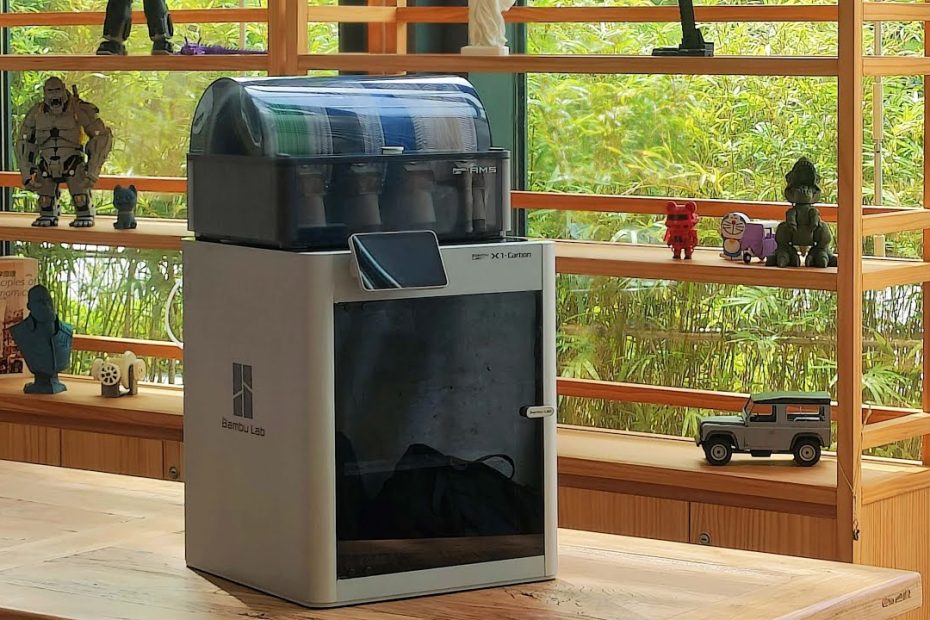
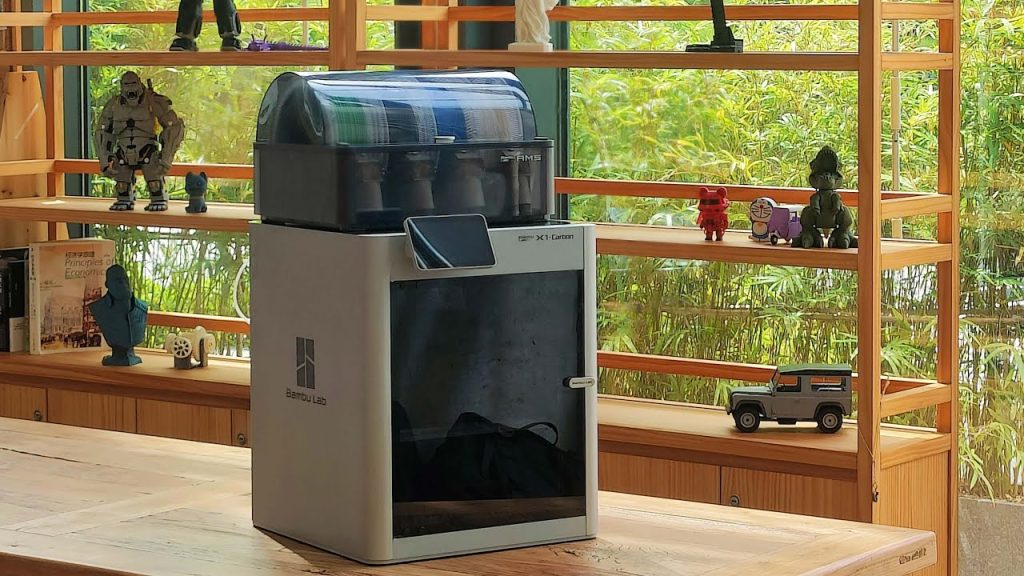
I recently purchased a Bambu Lab X1 Carbon and have been using it for a little over a month. I also upgraded to include Bambu Lab’s AMS system, which allows users to print with up to four colors at once. I’m writing this review to give readers an honest review on the product to help them make a decision on if its worth buying for yourself. I will provide some product specs first, some positives and negatives of the system, and finally a personal recommendation.
Product Specifications
| Print area | 256 x 256 x 256mm / 10 x 10 x 10in |
| Print Speed | 500mm/s capable |
| Nozzle Size and Type | 0.4mm Harden Steel |
| Nozzle Temperature | 300C |
| Print Bed Temperature | 120C |
| Print Bed Type | Bambu Flexible Cool Plate |
| Enclosure | Full (glass) |
| AMS | Enabled |
| Power Loss Recovery | Yes |
| Filament Run-Out Sensor | Yes |
| Auto Bed Leveling | LiDar |
| Filtration System | Carbon Filter |
| App Enabled | Yes |
Positives
Relative to the existing products on the market, I must say the X1 Carbon is a big improvement. The leader up to this point in my book has been the Prusa MK3.5, but Bambu has taken the lead. I’ll include my favorite features below.
I had this product up in running within half an hour of it arriving at my door step. The beauty of it arriving preassembled was that I only needed to remove some foam and a couple of screws to get it up and running. The Bambu Lab Splicer (my review can be found at a later date) is simple enough to use, and what a luxury to be able to use wifi enabled printing (no more running back and forth with the SD Card).
The app is also wonderful, making every step of the process easier. I can now start a print from my phone, watch on camera to ensure its working correctly, check on the time remaining, stop a print, receive an error message and even be notified once a print is completed. I must say its so much nicer to get a simple notification if the material runs out, as opposed to Prusa’s endless beeping (I must apologize to my neighbors).
If Prusa revolutionized the personal printer with their bed leveling technology, Bambu has taken it a step further. I’ve never had first layers that come out so clean, and its every time. I’m using less glue stick than ever with better, more consistent results.
Negatives
While there are plenty of reasons to enjoy the X1 Carbon, it is worth pointing out its flaws, which there are not many of. From a manufacturer who recently burst on the scene, they already have a reliable product which rivals any at the price point. But I digress, let us focus on what can be improved.
The first note is that the printer is actually to fast for itself… After some experimentation, the 500mm/s is so fast that the print head cannot melt material fast enough. It’s an interesting flaw that presents new challenges to the community. One solution is to go to a smaller nozzle, 0.2mm solves the issue (though resulting in longer prints). Conversely, we see the issue gets worse with a .6mm nozzle. It is not a massive issue, but there is a noticeable dip in quality.
Another problem is the AMS system. Though certainly easy to set up and eventually use after a few minutes of reading the instructions, Bambu Lab has a bit of an embarrassment on their hands. For no reason at all, they made this product a bit under sized. Other than the spools provided by the Bambu themselves, I’ve had issues with a variety of spool sizes. Most spools are so big that the lid cannot be shut without it jamming the system, thus rendering the humidity control completely useless. Maybe its a ploy to get users to purchase their spools, but it is worth noting there is a solution! The community has come together to produce upgrades that make this a viable color changing system. The Hydra System is 18 hours worth of prints but offers users improved variety in spool sizes. But be careful when upgrading, this will void the AMS warranty. I hope to see Bambu tackle this issue on their own in the near future.
I would not say I’m crazy about the touch screen. It usually works great and looks aesthetically pleasing, but on occasions when you have a print error I often find it lacking and frustrating in helping resolve the issue.
The enclosure is nice but I think it is lacking in sound reduction and lacks enough light to easily so your print (and if you add lighting it can have a negative effect on the LiDar sensor, which will need to be resolved in future products).
One small issue which was a bit comical: the only material I’ve had issue printing was the material that Bambu themselves provided. If you get your printer set up and the first prints fail using the Bambu Lab Black PLA, do not fret, literally every other material I’ve used has been successful. Just switch it out with any other spool you may have.
Personal Recommendation
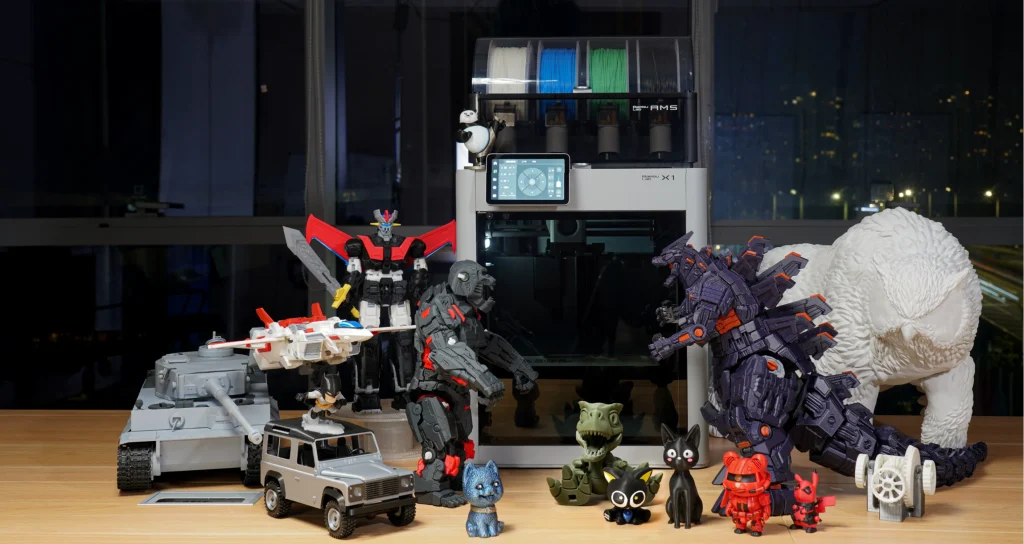
I’ve been 3D printing for about 10 years now with a variety of printers, and I have to say this is one of the best I’ve ever used. Bambu Lab have finally created a product and rival and almost certainly surpass the Prusa products to become the leader in the club house for personal 3D printing. As nice as the printer is however, I’m not so sure it isn’t a better use of your money to buy the Bambu Lab P1P however. There are certainly benefits to the X1 carbon, but the enclosure will only be worth it to some (ABS printing being the largest benefit). At half the price, you miss out on the carbon filtration and improved printer, and maybe some marginal noise dampening from the enclosure. That being said, it might just be worth the investment in case you do at some point want to use toxic materials. I will check back in at the 6 month and 1 year mark for further update.